

Key Takeaways
- Many Canadians continue to leave vacation time unused despite rising concerns about stress and burnout.
- Time away from work supports mental health, productivity, creativity, and overall wellbeing.
- Heavy workloads, financial pressures, and always-on technology make it difficult for many employees to fully disconnect.
- Employers that encourage employees to take vacation may benefit from higher engagement, stronger retention, and healthier workplace cultures.
Reading time: 6 minutes
Canadians Need a Break More Than Ever
Canadians know they need time off. Yet many still struggle to take it.
Between rising workloads, economic uncertainty, family responsibilities, and the expectation of being constantly connected, vacation time is often treated as a luxury rather than a necessity.
That mindset comes at a cost.
Research continues to show that taking time away from work supports mental health, productivity, creativity, and overall wellbeing. According to Gallup’s State of the Global Workplace report, employee stress remains high globally, reinforcing the importance of recovery and work-life balance.
As conversations around burnout continue to grow in Canada, vacation may be one of the most overlooked investments employees can make in themselves.
Why Vacation Time Matters More Than Ever
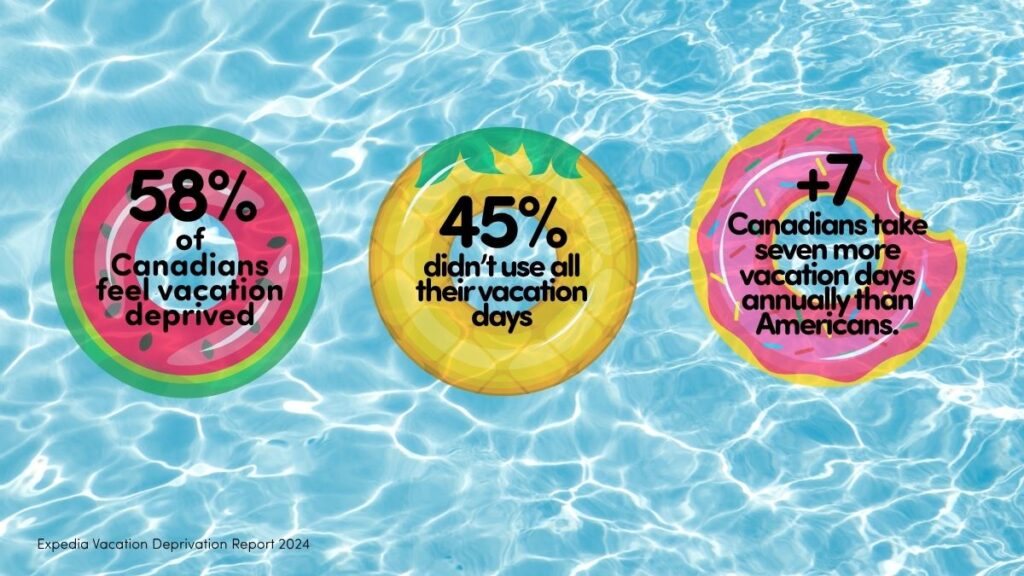
According to Expedia’s Vacation Deprivation research, many workers continue to leave vacation days unused or struggle to fully disconnect while away from work.
While Canadians consistently rank travel and time off among their top priorities, many report barriers such as workload concerns, financial pressures, staffing shortages, and fear of returning to an overwhelming inbox.
The challenge is not always access to vacation time. In many cases, it is workplace culture.
Employees may worry about appearing less committed, burdening colleagues, or falling behind on projects. Others simply feel there is never a “good time” to step away.
The Canadian Mental Health Association notes that periods of rest and recovery are important for maintaining mental wellness and managing stress. Yet many Canadians continue to postpone taking the time they have earned.
How Vacation Time Supports Employee Wellbeing
Many people think of vacation as time away from productivity. Research suggests the opposite.
Harvard Business Review found that employees who regularly take vacation often return with improved focus, energy, creativity, and decision-making capacity. Recovery periods help replenish mental resources that become depleted during prolonged periods of work.
Taking vacation can help:
- Reduce stress
- Improve sleep quality
- Restore focus and creativity
- Strengthen personal relationships
- Improve job satisfaction
- Support long-term wellbeing
Just as athletes require recovery periods to perform at their best, professionals, skilled tradespeople, and knowledge workers benefit from periods of rest and renewal.
Taking vacation is not stepping away from success. It can help support it.
Why Work-Life Balance Is Hard
Technology has made work more flexible than ever. It has also made it harder to unplug.
Smartphones, email, messaging platforms, and hybrid work arrangements mean many employees remain connected to work even while on vacation. This constant connection can reduce the restorative benefits of time off.
Ontario’s Disconnecting from Work legislation reflects growing awareness of this issue. While policies alone cannot eliminate burnout, they reinforce the importance of setting boundaries and allowing employees to truly disconnect.
True recovery often requires more than simply being out of the office. It requires enough separation to allow the mind and body to recharge.
Burnout Remains a Workplace Reality
Burnout affects workers across industries.
Whether someone works in engineering, technology, life sciences, healthcare, manufacturing, administration, or skilled trades, prolonged stress without adequate recovery can affect performance and wellbeing.
Gallup’s State of the Workplace continues to identify workplace stress as a major contributor to lower engagement, decreased productivity, and employee turnover.
While vacation alone is not a complete solution to burnout, regular time away from work can play an important role in managing stress and supporting long-term wellbeing.
Supporting Employee Wellbeing at Work
Employers are increasingly recognizing that employee wellbeing influences productivity, engagement, and retention.
Benefits Canada reports growing employer investment in workplace mental health, stress management, and employee wellbeing initiatives.
Organizations can support healthier workplace cultures by:
- Encouraging employees to use their vacation time
- Planning workloads to support absences
- Respecting boundaries during time off
- Modelling healthy behaviours
- Recognizing that recovery supports long-term performance
Employees who feel supported in taking time away are more likely to return energized, engaged, and ready to contribute.
Time Off Is an Investment, Not an Indulgence
The idea that success requires constant work is slowly changing.
Today’s workforce increasingly understands that wellbeing and performance are connected.
Vacation provides an opportunity to rest, reconnect with family and friends, and return to work with renewed energy and perspective.
Whether that means travelling abroad, exploring Canada’s natural beauty, taking a weekend road trip, or simply spending a few days relaxing at home, making time to disconnect may be one of the healthiest career decisions you can make.
Frequently Asked Questions
Why do Canadians avoid taing vacation time?
Many Canadians cite workload pressures, financial concerns, staffing shortages, family responsibilities, and difficulty disconnecting from work as reasons for not using all of their vacation time.
Does taking vacation improve productivity?
Research suggests that regular time away from work can improve focus, creativity, energy levels, and overall job performance by allowing employees to recover from workplace stress.
What is vacation deprivation?
Vacation deprivation occurs when employees do not take all of their earned vacation time despite needing rest and recovery.
Can vacation help prevent burnout?
While vacation is not a complete solution to burnout, time away from work can help reduce stress, improve wellbeing, and support healthier long-term work habits.
How can employers encourage employees to take vacation?
Employers can encourage vacation usage by supporting workload planning, respecting employee boundaries during time off, modelling healthy behaviours, and fostering a workplace culture that values wellbeing.
How much vacation time do Canadians receive?
Vacation entitlements vary by province and employer. Most Canadian employees receive a minimum of two weeks of paid vacation after one year of employment, with additional vacation time often provided based on tenure, collective agreements, or employer policies.
Explore More Career Resources
How to Stay Productive at Work Without Burning Out
How to Fall in Love with Your Job Again
The power of vacation: Canadians missing out on health and happiness
How to Stand Out in a Tough Job Market
Proactively Manage Your Mental Health During a Job Search
About Agilus
At Agilus by Synergie, we connect talented professionals with opportunities across engineering, technology, life sciences, professional services, and industrial sectors across Canada.
Looking for a better work-life balance? Check out our current opportunities or create a job alert to stay informed about new roles that match your skills, experience, and career goals.